
|
Getting your Trinity Audio player ready...
|
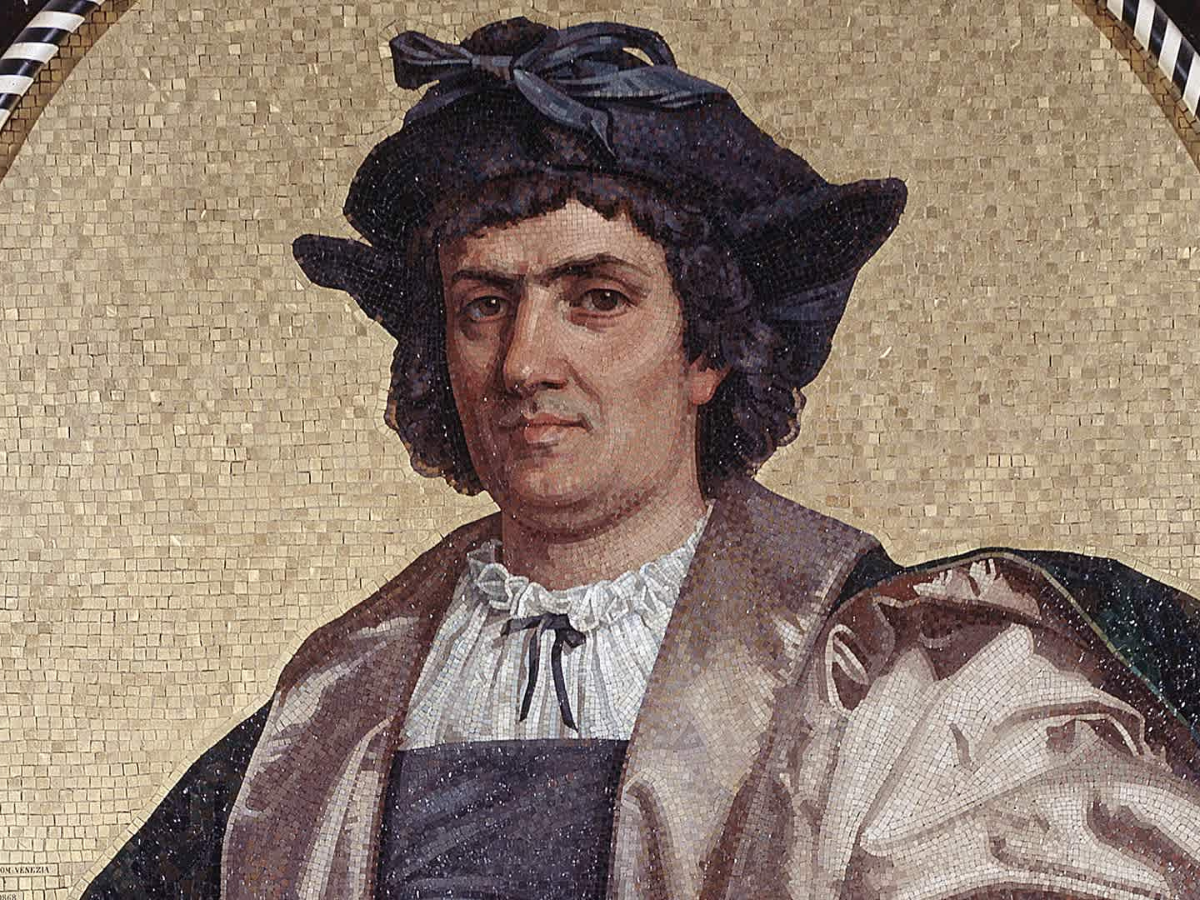
When President Donald Trump signed a proclamation on October 9th, 2025, declaring October 13, 2025, as Columbus Day, he once again reignited one of the most enduring debates in American cultural memory, further politicizing and framing Columbus as part of American history, despite his role being primarily linked to an expedition rooted in European colonialism. Setting aside the superficiality of it all by the Trump administration as a simple political gesture to appease a particular ethnic group within the American public, it is more clearly seen as an effort to combat what President Joe Biden rightly and more appropriately called Indigenous Peoples’ Day, which also takes place on October 13. Having Columbus Day once again proclaimed is both strange and controversial. Still, it highlights the ongoing challenges Americans face in confronting the truth about Christopher Columbus and his proper place in American history.
The proclamation released by the White House explicitly states that Christopher Columbus was “the original American hero, a giant of Western civilization, and one of the most gallant and visionary men to ever walk the face of the earth. It then went on to state that “This Columbus Day, we honor his life with reverence and gratitude, and we pledge to reclaim his extraordinary legacy of faith, courage, perseverance, and virtue from the left-wing arsonists who have sought to destroy his name and dishonor his memory.” It would go on to further state that “…in recent years, Christopher Columbus has been a prime target of a vicious and merciless campaign to erase our history, slander our heroes, and attack our heritage. Before our very eyes, left-wing radicals toppled his statues, vandalized his monuments, tarnished his character, and sought to exile him from our public spaces.” It seems that to the Trump administration, Columbus has become a political tool used to attack perceived left-wing troublemakers further.
When White House staff secretary Will Scharf presented the proclamation for President Trump to sign, he elaborated by calling Christopher Columbus “a great Italian explorer…and this is a particularly important holiday for Italian Americans to celebrate the legacy of Christopher Columbus and the innovation and explorer zeal that he represented.” By emphasizing his importance to Italian American heritage, Trump’s proclamation reinforced a narrative long disputed by Native peoples and historians alike. For many supporters, Columbus Day continues to function as a symbol of immigrant pride and the spirit of exploration. For others, however, it represents the glorification of a figure whose expeditions inaugurated centuries of exploitation, dispossession, and violence against Indigenous peoples, with their devastating effects still very visible today. The persistence of this division illustrates not merely a disagreement over commemorative practices but a deeper fight over how the United States chooses to remember its past and the values it promotes in public and political life, including the continually dangerous practice of elevating mythology to the status of historical fact.
Part of the reason this myth persists is because of the misinterpretation of Columbus’s origins. Italy did not exist as a unified nation-state until the mid-1800s, with unification officially declared in 1861 under the Kingdom of Italy. Before this political unification, the Italian peninsula was a patchwork of independent states, duchies, kingdoms, and republics, each with its own culture, economy, and government. Columbus was born in 1451 in the Republic of Genoa, an independent maritime republic and trading hub on the Ligurian coast. Genoa was not part of any entity similar to the modern Italian nation. Calling Columbus “Italian” in the modern sense is therefore an anachronism, as it applies a contemporary national identity to a time when such an identity did not exist.
Columbus’s career was also quite separate from his Genoese origins. After years of trying to find support for his daring plan to reach Asia by sailing west, he finally gained backing not from Genoa but from Spain. His voyages across the Atlantic were funded by the Spanish monarchs Ferdinand II of Aragon and Isabella I of Castile, whose marriage united two powerful kingdoms and laid the groundwork for Spain as a nation. By agreeing to sponsor Columbus’s 1492 expedition, they backed a vision of empire expansion that aligned with Spain’s growing ambitions as a world power. Columbus, therefore, sailed not under an Italian flag, as many may believe, but under the Spanish banner, and his discoveries benefited the Spanish crown more than his homeland.
Furthermore, the traditional story of Columbus as a heroic navigator and fearless explorer obscures as much as it reveals. While his voyage across the Atlantic in 1492 has been celebrated as a milestone of discovery, now even more so under the Trump administration, closer examination reveals the flaws and mistakes that influenced the journey. Columbus misjudged the size of the Earth, underestimated the distance to Asia, and, despite his reputation, often found himself lost or confused in unfamiliar waters. These navigational errors are rarely highlighted in the heroic accounts of his landing, which instead focus on his eventual arrival in the Caribbean and frame the “discovery” as an inevitable achievement, assuming he deliberately landed there through his talent as a navigator. Yet the record shows that Columbus’s success was less about mastery and more about improvisation and luck. Recognizing this helps remove the illusion of inevitability and reveals the fragility of what is often called his triumph, especially in today’s understanding of his voyage.
Even more troubling is what followed Columbus’s arrival. Far from initiating an era of peaceful contact, his expeditions became sources of horrific violence and destruction, and in many ways, they were acts of purposeful terror. The Indigenous communities of the Caribbean, especially the Taino people, endured enslavement, brutal bodily mutilation, forced conversions, sexual violence, and the imposition of systems that shattered their social, cultural, and spiritual structures. Columbus’s arrival caused the collapse of entire societies through war, disease, and the rapid exploitation of resources.
Initially, Columbus described the Taino as generous and hospitable, noting how they willingly shared food, parrots, cotton, and small gold ornaments with his crew. Yet his journals reveal how quickly he interpreted their openness as weakness and opportunity. Instead of recognizing them as equal trading partners, he saw them as a labor force that could be subdued and converted to Christianity, coming under the boot of the Spanish crown. His fascination with their small gold ornaments soon turned into an obsession, leading him to believe that vast riches were hidden throughout the islands. To extract this wealth, Columbus imposed a harsh tribute system on Hispaniola, which consists of the modern-day Dominican Republic and Haiti. Every Taino over fourteen was required to deliver a quota of gold dust or, in areas where gold was scarce, pounds of spun cotton every three months. Those who failed to meet these demands faced brutal punishments: eyewitness accounts describe mutilations, such as the cutting off of hands, noses, or outright executions designed to terrorize others into compliance. Entire communities were forced to abandon farming and fishing, the very foundations of their survival and subsistence, to pan rivers for flecks of gold that often did not exist in the demanded quantities.
This brutality was not an accident of conquest but central to Columbus’s mission and to the imperial ideology he upheld on behalf of Spain. Indigenous voices, preserved in fragments of colonial chronicles and carried forward in oral traditions, testify to countless practices of betrayal, enslavement, and mass death. For many Caribbean descendants, Columbus is remembered not as a discoverer but as a bringer of destruction. These perspectives challenge the sanitized myths long ingrained in Western histories and demand recognition as vital sources for understanding the true legacy of his voyages and what they actually brought to the “New World.”
Columbus’s actions were also not isolated. He acted as a forerunner to broader campaigns of violence carried out by figures like Hernan Cortes in Mexico and Francisco Pizarro in Peru, whose military efforts dismantled powerful Indigenous civilizations and brought them under Spanish control. In each case, conquest was justified with the language of Christianity and exploration, but carried out through systems of brutal terror against Indigenous populations. Placing Columbus within this truthful pattern shows that his violence was not just individual cruelty but part of an imperial system aimed at extracting wealth and maintaining domination at any cost. Celebrating Columbus promotes a view of brutal conquest that became a fundamental part of European colonization of the Americas, and that may be the purpose.
All of this history sharply contrasts with the romanticized image of Columbus that has gained traction in certain circles, especially within parts of the Italian American community. To present him as a cultural hero or symbol of immigrant struggle is to engage in selective remembrance that glosses over the suffering he caused and reflects a mistaken view of history. While it’s understandable that communities seek figures to foster pride and belonging, choosing Columbus highlights the risks of misinterpreting who he truly was and what he represented. To idealize a man knowingly involved in slavery and genocide distorts the past and reinforces myth, spreading misinformation and blocking a more honest understanding. The tendency to cling to such myths reveals how deeply cultural identity can become intertwined with historical distortion, creating a version of history that comforts rather than challenges and relies on feelings rather than truth.
This persistent notion of Columbus as an “Italian hero” is even more problematic because it is a construct of much later history, particularly in the United States. During the late nineteenth and early twentieth centuries, Italian immigrants faced widespread prejudice and discrimination and looked to cultural figures who could symbolize pride and legitimacy within American society. Columbus was reinterpreted as a symbol of Italian American achievement, with his Genoese origins turned into a badge of shared heritage. Monuments, parades, and eventually a federal holiday made him a symbol of immigrant resilience and contribution, even though the historical Columbus had no real connection to Italy as a nation and no role in the Italian immigrant experience. This myth shows how historical figures can be adapted to meet the needs of communities searching for belonging and recognition. While understandable to some degree, this particular case largely overlooks the basic historical context of Columbus and his destructive actions. He was not a hero, nor should he ever be considered one. Such a perspective shows the danger of elevating symbols whose true histories involve violence and exploitation.
The dark history of Christopher Columbus cannot be separated from the broader story of American identity. Keeping his status as a national hero means hiding the violence of his expeditions and ignoring the deep impacts on Indigenous populations. Replacing him with a celebration of Indigenous Peoples does not deny Italian American heritage or the spirit of exploration. It acknowledges that history must be told in its entirety, that myths should not overshadow the truth, and that collective memory should make room for those who have long been silenced. The choice to honor Columbus or to replace him tests whether society will cling to comforting myths or face the painful truths beneath its foundations. While President Trump and his administration knowingly dismiss a genuine historical examination of Christopher Columbus and interpret the reintroduction of Columbus Day as a return to celebrating American history, in a tremendously ironic sense, they are running away from the truth. The duty of history is to tell the truth, no matter how uncomfortable. Only then can society start to heal the divisions caused by centuries of colonial violence. The mythology of Columbus’s story and its uplifting are a warning to Americans about how myth, power, and violence have shaped the stories we inherit, and a reminder that justice begins with honestly confronting our collective past and working through it together to understand those uncomfortable, but truthful, historical realities.

Miguel Douglas is the executive director of American Indian Republic and is an enrolled member of the Puyallup Tribe of Indians. He has written extensively on Indian gaming and its effects on American Indian communities. He has received a Master’s Degree in Interdisciplinary Studies from the University of Washington.


wiseeagle1
October 14, 2025 at 5:16 am
Hi I’m native American I spent the day watching pow wow on YouTube and enjoying three Sisters soup Columbus did not discover America but wanted our gold and to kill us Wise Eagle
Miguel Douglas
October 14, 2025 at 7:00 am
That sounds like a great day, wiseagle1! And you’re right, our people were here long before Columbus.