
|
Getting your Trinity Audio player ready...
|
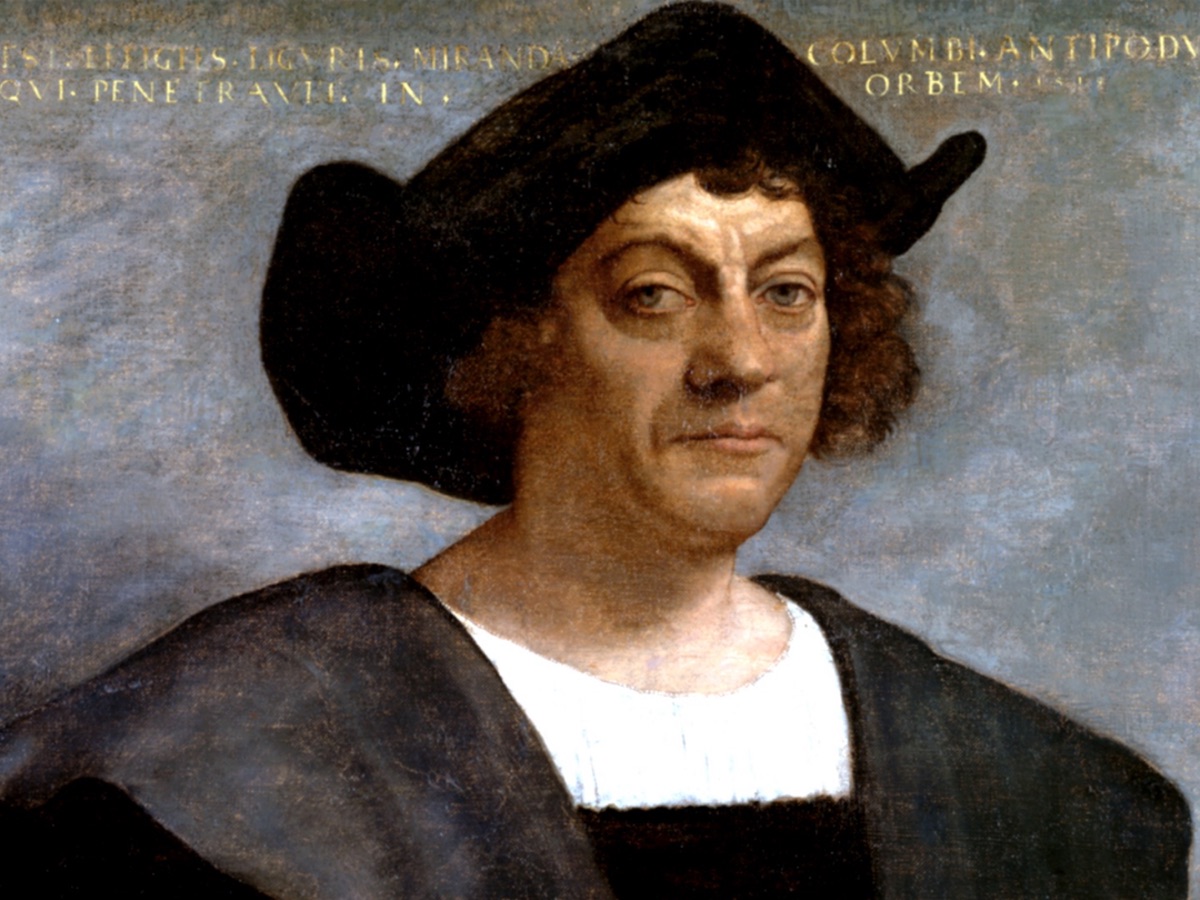
There remains a widespread sentiment that the Indigenous populations of the Awarak, Taino, and Lucayan from which Italian explorer Christopher Columbus discovered in 1492 was, by many accounts, “barbaric savages.” Childlike, violent, godless, deficient in government, technology, philosophy, and other distinctive features that at the time was viewed as necessary elements in the formation of an authentic civilization.
Conversely, Columbus has often been, until most recently, popularly understood as the representative of a civilized Eurocentric worldview whose advancements in the areas of government, technology, and philosophy, amongst other societal functions, transformed him into a bearer of development that elevated the statuses of the “inferior” indigenous populations. Future settlers and colonizers of the Americas would also perceive and widely perpetuate this construct of American history.
The real irony is that long before Columbus made contact with the “New World,” – a world that he believed was in India – many Native American populations had already developed highly advanced civilizations. Some of these Native American cultures had developed extensive irrigation networks that contended with those found in Europe. They had formulated an acute understanding of nature. They had domesticated crops. They had incredible knowledge surrounding natural medicines. They had also developed extraordinarily sophisticated forms of governments from which the concept of freedom was not only treasured but was also the leading principle throughout their respective administrative bodies. However, these high achievements from America’s indigenous peoples are seldom acknowledged as significant foundational elements of the American cultural landscape and beyond.
The real irony is that long before Columbus made contact with the “New World,” – a world that he believed was in India – many Native American populations had already developed highly advanced civilizations.
The scope of discussion regarding American history has often perpetuated the mythology mentioned above of Eurocentrism, diminishing much if not all of the impact that America’s indigenous peoples have had in shaping the historical trajectory of the continent. It has only been in the last 50 years that the prevailing thoughts of history had shifted, with prior mainstream historians interpreting everything that was notable about America occurring in and after 1492, with the origins of America residing in Europeans bringing civilization to the traditional inhabitants and taming the natural environment in the process.
Notions contributing to the roots of Manifest Destiny would also come into play as well, and with it, the search for the perfect civilization with a divine will serving to propel America towards greatness. This approach and understanding derived from applications of Western thought at the time, a thought process which viewed the Western “civilized” world as being at the forefront from which all other human societies were to admire and follow – usually at the behest of applied force along the way.
Historians who had subscribed to this Eurocentric interpretation of history have strengthened it by looking at the introduction of Europeans onto the American continent as a continual process of improvement, whether it be the traditional inhabitants or natural environment. Indeed, many of the first settlers had viewed it in the same fashion. Historians who follow this ideology have frequently selected – and simply disregarded – valuable information regarding the truthful past surrounding the interactions between indigenous peoples and European settlers. This doctrine has manifested itself in a variety of destructive ways, including the consideration that the persecution of the native populations of America was an inevitable but fundamentally positive outcome.
Historians who follow this ideology have frequently selected – and simply disregarded – valuable information regarding the truthful past surrounding the interactions between indigenous peoples and European settlers.
This basis for understanding is undoubtedly dangerous thinking. For any civilization to believe that they hold ultimate knowledge and that others need to be given it, inexplicable and horrible actions can be pursued to administrate that perceived superior knowledge. History has shown us this to be true. In the case of the Americas, the notion of civilizing the native savages has persisted within Eurocentric views of American history. This understanding has often come in the form rationalizing many of the destructive practices exerted upon the indigenous populations, in turn envisioning a world where the American Indian interpreted as the “other,” a term used to invoke the cultural inferiority of one group to that of another.
The origins of America, and as most Americans understand it, consists of the immense journey of the European settlers to the Americas, where they transformed it into new expressions of Europe and brought along with it the cultures of the Old World. While this is true, it completely disregards the fact that European settlers and colonizers did not land on virgin soil in American but rather in the midst of a multitude of complex and rich indigenous peoples and civilizations.
The story of Europeans settlers and colonizers is not one of a foreign people exploring an unoccupied continent; it is one of human interaction and immense struggle that equaled a fundamental clash of worldviews. The discounting of this facet of history is not only harmful to contributions of American Indians and other indigenous populations throughout the Americas but on a deeper level, who we are as a collective nation.

Miguel Douglas is the executive director of American Indian Republic and is an enrolled member of the Puyallup Tribe of Indians. He has written extensively on Indian gaming and its effects on American Indian communities. He has received a Master’s Degree in Interdisciplinary Studies from the University of Washington.
Waggaze Cebon
May 19, 2019 at 9:17 am
The article is a good assessment of Eurocentric views of Indigenous societal governments and developed ecosystems that served the millions of indigenous people in the Americas. Where this article falls short is calling out the American Holocaust that took place in several steps with the Indian Killer Jackson and his Manifest Destiny being the final solution that Hitler’s Nazi government patterned the Jewish final solution on.
There must be an open and honest dialogue in America starting in the K-12 and universities history courses to bring real truth to this subject. Being in denial of thought out interactions with the Indian Problem first addressed by George Washington forward by every president must be an honest discourse and not an evasive subject matter in history studies and furthermore honest public discourse dispelling John Wayne mentality and public perception of Eurocentric policies were correct including intervention by Christian philosophy of killing the savage to save the man failed policy.of boarding schools destroying societies that evolved over millenials of coexistence.
Aldo
October 9, 2023 at 10:43 pm
The term Eurocentric is in itself a flawed generalization. America had many tribal nations and the old world many nation states, kingdoms, etc. So the Spanish are really just another tribe if you will. The later settlers were no longer European, they left it behind and brought their own distinct cultures. The Americans were also distinct cultures, languages and religions. Some of the tribes had made some achievements. They did not collectively have all of those accomplishments. They worked in stone not bronze or iron. In 10,000 years no one in the whole continent made a map of the place until Amerigo Vespucci did it thanks to explorers in boats. They had canoes instead of seafaring vessels. Which is why they committed their own genocide when they did not sail across the water FIRST and get acclimated with the rest of the world. They committed their own genocide when the didn’t record their own histories- not on walls, not on papyrus, not on floppy disks. They committed their own genocide when they warred with each other and enslaved each other instead of unifying in a great Pan-American nation. No they paved they way for a tribes from across the water to war some more, slave some more and write their centric stories about them Starring John Wayne. This article is naive in the fact that it ignores the processes of history and human nature and acts like 1492-2023 is some novel occurence. Happy Italian Heritage Day everyone!
Miguel Douglas
July 8, 2025 at 9:45 am
You are making a series of reductive claims that crumble under even minimal scrutiny, so let me address just some.
The idea that Eurocentrism is a flawed term misinterprets its critique of how European perspectives have dominated historical narratives. Reducing the Spanish Empire to “just another tribe” ignores the violent asymmetry of conquest between powerful European states and Indigenous nations. Settlers, even the latter descendants of ones, whom you bring up, continued transplanting European legal systems, religions, and racial hierarchies onto colonized lands, rather than abandoning their own culture. This act of transplantation highlights the intentionality behind their actions.
The claim that Indigenous Americans “only worked in stone” and “didn’t collectively achieve much” is both historically inaccurate and intellectually dishonest. No civilization in history achieved everything alone; Europe relied heavily on technologies from Asia and the Islamic world. Indigenous cultures, such as the Maya, Inca, and Mississippians, built complex cities, engineered vast road systems, practiced astronomy, and developed advanced agriculture without relying on iron or the wheel. Metallurgy was prevalent, and gold, silver, and bronze were used extensively, often for ceremonial or cultural purposes, rather than warfare. Dismissing their achievements imposes a Eurocentric standard of progress. To say they “didn’t collectively” accomplish things is also a flawed comparison; Europe was far from being “unified” either. Holding Indigenous peoples to a collective standard you don’t apply to Europe reveals bias, not historical insight. Dismissing these cultures for not mirroring European developments also exemplifies the very Eurocentrism you claim does not exist. This perspective is not a bold critique; it is a justification for colonial conquest disguised as historical realism.