|
Getting your Trinity Audio player ready...
|
As a technology strategist and entrepreneur, I have always been fascinated by technology’s power to transform the human experience, both individually and collectively. Few forces can reshape how people communicate and imagine the future as technology does. However, one of the greatest challenges of technological progress is its pace of evolution. Innovation is accelerating at a pace that often exceeds society’s ability to fully understand, prepare for, or adapt to its consequences. New technologies can, and actively are, reshaping economies, institutions, communities, and everyday life long before their broader social, cultural, and ethical impacts become clear.
Because of this complexity, I have learned to approach technological advancement with both optimism and caution. Throughout my career, I have viewed technology as a powerful yet fundamentally neutral force. Technology itself is neither inherently beneficial nor harmful, but rather, its impact is determined by the people, institutions, governments, and corporations that design and deploy it. The same tool can create opportunity and strengthen communities, or it can reinforce existing inequalities and create new forms of harm. This understanding shapes how I approach artificial intelligence (AI), prompting careful examination and recognition that every major technological shift carries both extraordinary possibilities and significant consequences.
When artificial intelligence emerged in recent years as the next great technological revolution, I approached it with skepticism, but not as someone unfamiliar with innovation or resistant to technological advancement. My perspective comes from more than a decade of building in the technology space, developing digital platforms, working with evolving systems, and witnessing firsthand how quickly new technologies can move from experimental concepts to essential parts of daily life. I understand both the excitement surrounding emerging technologies and the importance of asking who benefits from them, who controls them, and who may be affected by their unintended consequences.
My experience includes developing several mobile applications that leverage technology to benefit Indian Country, including Native Nations, a digital directory of all federally recognized tribes in the United States, and Nativepreneurs, a platform highlighting Indigenous-owned businesses and entrepreneurs, just to name a few. These projects were built on the belief that technology, when thoughtfully designed and responsibly implemented for Indigenous Peoples, can strengthen sovereignty, expand access to information, create economic opportunities, and serve Indigenous communities. Because I recognize technology’s immense potential, I believe we must also critically examine artificial intelligence and the broader systems that enable it.
These experiences in software development make it impossible for me to dismiss AI as a passing trend or a simple threat. I fully understand its power. I also understand why tribal governments and entities, Indigenous entrepreneurs, and community organizations in Indian Country may increasingly see AI as a tool for survival in settler-colonial systems that constantly demand more from Indigenous communities while giving them fewer resources. But, and this is a critical component of understanding, I approach AI through an Indigenous lens, which makes me unwilling to accept the mythology currently being sold by Silicon Valley that every new technology is progress, that every platform is neutral in the political and social spheres, that every efficiency is harmless, and that every Indigenous community should simply adapt to digital systems built elsewhere by multi-billion-dollar companies with no treaty obligations, no cultural accountability, and no relationship to the lands and waters their technologies ultimately depend on. From where I stand, AI will reveal whether Indian Country can use powerful new technological tools without surrendering data, culture, water, energy, governance, and sovereignty to another generation of outsiders who call methods of extraction “innovation.” Given my extensive knowledge of the technological landscape, I believe the majority of tribes are significantly lagging behind and even failing to adapt to and confront the current challenges posed by AI in their respective communities.
In a broader sense, contemporary expressions of artificial intelligence have recently been framed as the next digital revolution, a transformative leap into a future that large tech companies publicly define as offering improved automation, prediction, efficiency, and seemingly limitless computational power. They say it will make everyone’s jobs easier, apparently. Its public language is deliberately weightless, situated within external systems such as cloud computing, machine learning, neural networks, smart platforms, virtual assistants, generative systems, and large language models. These terms suggest a technology that exists above geography, as if artificial intelligence now floats beyond the material limits of the environment and labor. It is perceived as an abstraction, implemented throughout our societal landscape without harm. However, in the context of Indian Country, this language should be approached with extreme skepticism and, in the case of many tribal communities, outright rejection.
I propose that Indian Country must begin to view AI as a territorial, environmental, cultural, and political issue, and tribal leaders and decision-makers must become knowledgeable about its considerable dangers. Using it as a tool because it is “cool” is, at best, both illusory and foolish. Behind every chatbot, predictive model, automated decision system, translation tool, image generator, and data analytics program lies a vast physical infrastructure of data centers, transmission lines, substations, cooling systems, backup generators, mineral supply chains, fiber-optic corridors, water withdrawals, and energy contracts. All these systems are built somewhere. They draw power from somewhere. They consume or depend on water from somewhere. They rely on lands, grids, minerals, and regulatory decisions that are always embedded in histories of power, largely between tribal communities and their traditional environmental, social, and political landscapes. For tribal communities, whose modern political existence has been shaped by decades of struggles over land, water, treaty rights, cultural knowledge, and self-government, the rise of AI must be understood as the most recent chapter in a much older question, namely, who controls the future when technological development arrives in Indian Country in the name of “progress?”
The importance of this question lies in the long history of technologies and infrastructure that the broader American public celebrates, even as these systems impose severe burdens on tribal communities. Historically, large-scale federal development measures, such as railroads, dams, mines, highways, military installations, timber extraction, and fossil fuel projects, were repeatedly described as necessary for national development. They promised a host of benefits that would reinforce modern convenience. However, the Indigenous experience of many of these projects was often drastically different, marked by land loss, disrupted fisheries, desecrated burial sites, flooded villages, contaminated water, restricted access to traditional foods, and exclusion from meaningful decision-making processes that would influence their respective tribal communities for generations to come. In many cases, they were not even invited to the negotiation table. The public story was usually one of innovation and economic benefit, but the tribal reality was often environmental sacrifice and jurisdictional conflict for their communities. AI now arrives with a different vocabulary, but it raises a larger subset of familiar questions. Who benefits from the infrastructure required to power this new economy? Who bears the ecological cost? Who controls the data? Who sets the rules? Who decides whether a new technology strengthens or weakens tribal sovereignty? I have witnessed some tribal communities being completely in the dark about all of this, and caring only on a superficial level. If Indian Country does not ask and directly confront these questions now and demand a seat at the table, AI may reproduce old patterns of extraction through new digital systems.
From a technical standpoint, the scale of AI’s physical footprint is already significant and growing rapidly. Global data centers consumed roughly 415 terawatt-hours of electricity in 2024, about 1.5 percent of total global electricity demand. By 2030, that figure is projected to reach approximately 945 terawatt-hours, bringing data centers close to 3 percent of global electricity consumption. The United States is central to this growth. U.S. data centers consumed about 4.4 percent of national electricity in 2023, and current projections suggest that figure could rise to between 6.7 and 12 percent by 2028. A more recent update projects that data centers could account for roughly 11.8 percent of total U.S. electricity by 2030, with a scenario range from 9.5 to 15.3 percent. These technical statistics provide evidence that AI is becoming a major participant in the U.S. energy system. When data centers demand power at this scale, they influence electricity rates, water use, climate goals, land acquisition, and regional infrastructure priorities. For tribes, that means that usage of AI must be evaluated by what it requires of the physical world itself, rather than as an abstraction on a computer screen or as something that merely provides a different workflow in the tribal administrative workplace.
Understanding AI as a physical infrastructure rather than an invisible technology reveals four key areas that tribal nations should closely consider: data centers, water, energy, and data sovereignty. These are the four key components I would like to highlight for tribes to consider closely when they assess the broader effects of artificial intelligence. These components are the physical foundations that make AI possible, yet they are often obscured by the externalized language of innovation. Data centers require large tracts of land and long-term access to water and power. In Indian Country, water is especially critical because many tribal communities already face issues with their treaty-protected resources. Energy is equally important because AI-driven data centers can place intense pressure on regional power grids and influence future energy development near or on tribal lands. While these projects may be presented as opportunities for jobs, lease revenue, or economic diversification, tribes must carefully weigh those promises against the long-term environmental costs, which encompass increased water consumption, land disturbance, noise, emissions, energy dependence, and the possibility that outside corporations may benefit more than tribal communities. Finally, data sovereignty must be considered when using AI because once that information is extracted and leaves tribal control, it may be used to train future technologies in ways that weaken a tribe’s authority over its own knowledge and decision-making. In this sense, data centers, water, energy, and data sovereignty are not separate issues, but they are deeply interconnected parts of the same AI infrastructure, and each must be evaluated through the lens of tribal sovereignty, environmental stewardship, and the responsibility to protect land and resources for future generations.
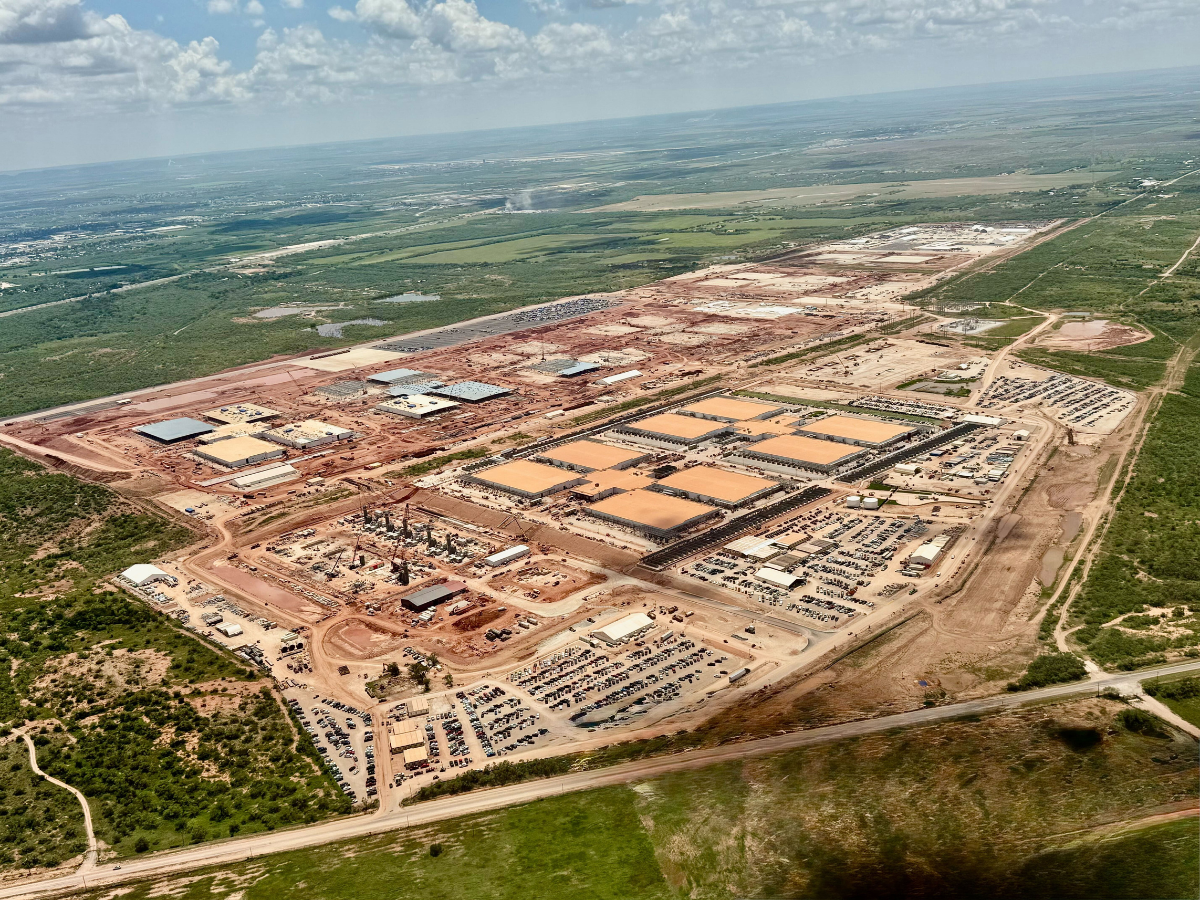
Firstly, the data center is a vital physical component of the AI era. Often seen as a clean, windowless building full of servers, it should absolutely be regarded as an environmental actor, and a damaging one at that. Constructing a data center requires significant land, power, cooling, and a stable grid connection. Its electricity needs can lead to new substation construction, transmission upgrades, power purchase agreements, battery systems, gas-fired plants, renewable energy projects, or increased reliance on existing fossil-fuel plants. Cooling typically consumes large amounts of water, especially with evaporative systems, or additional electricity when using air cooling or other methods that increase grid load. Even if individual facilities improve efficiency, the sector’s overall growth can strain regional water and energy resources. This presents the paradox of AI infrastructure, in which efficiency gains lower computation costs, which in turn can boost adoption and overall demand. For tribes, the key issue is whether the collective expansion of AI infrastructure alters regional resource politics in ways that threaten tribal environmental sovereignty.
Secondly, water makes this issue especially visible. AI systems generate heat because computation is physical. Servers, chips, and cooling systems convert electrical energy into thermal energy, and that heat must be managed. Some data centers use cooling methods that consume large quantities of water, while others use technologies that reduce direct water use but increase electricity demand or shift water consumption to the power generation system. Major technology companies that are actively promoting the implementation and use of AI, such as OpenAI, Google, and Microsoft, have reported billions of gallons of water consumed annually across their operations, and the growth of AI computing is placing new scrutiny on how data centers interact with local watersheds. For tribes, this is, and should absolutely be, a matter of water justice. Many tribes continue to fight for the full recognition and enforcement of their water rights. Many tribal communities face aging water infrastructure, contamination, drought, and unequal access to safe drinking water. When AI infrastructure enters tribal regions already marked by scarcity or legal conflict over water, it can intensify competition among cities, agriculture, industry, energy developers, and tribal governments. In that setting, water used to cool machines is never politically neutral, and tribal input has historically been ignored.
Thirdly, energy demand raises another layer of concern. Technology companies often emphasize renewable energy commitments, but the physical system must balance supply and demand in real time. A data center may purchase renewable energy credits or sign clean power agreements, but its ongoing demand can still rely on a regional grid that draws on hydropower, natural gas, coal, nuclear power, or other resources. In some places, data center growth may delay fossil fuel retirements or encourage new gas infrastructure, prolonging its negative effects on the environment. In other places, it may accelerate renewable energy development, but such projects can also raise tribal concerns when they affect land, water, or treaty-protected resources. If AI demand increases pressure on such systems, tribes must insist that energy policy be evaluated in light of treaty obligations and environmental justice, not merely through carbon accounting or simplistic, abstract tribal partnerships with external, non-Indigenous corporations that prioritize profit over all else.
Lastly, and most importantly, the same logic equally applies to data sovereignty. Extraction in Indian Country has never been limited to environmental “resources,” as some may believe. It has also included the extraction of such things as stories, ecological knowledge, human remains, and sacred objects, just to name a few. Outside, mainly non-Indigenous researchers and other external sources have collected Indigenous knowledge for generations, often without full consent or proper cultural authority. These materials were cataloged, interpreted, published, stored, and circulated through non-Native institutions, while the tribal communities from which they came were frequently denied access or authority over them. AI raises the possibility that this pattern will be reproduced on an unprecedented and enormous scale. Large language models are trained on vast bodies of text, images, audio, and code. If Indigenous materials enter these systems without proper consent or governance, they may be detached from the relationships, protocols, and responsibilities that give them meaning, giving rise to extraordinary modes of contemporary extraction. A sacred story can become public content on the internet. A place name can become a data point. A language recording can be used as training material and exploited without consent. A cultural teaching can become a generated answer stripped of cultural context. A tribal legal document can become part of a system owned by a non-Indigenous entity, which can then leverage that private data in some manner.
This is why Indigenous data sovereignty must be central to any tribal AI framework. Indigenous data sovereignty rests on the principle that tribal communities have the right to govern the collection, access, and use of their own data. Applied to AI, that principle requires tribes to ask whether a tool respects tribal authority or transfers power away from it. The risk is especially dangerous because it often appears ordinary. Given the extensive public propaganda surrounding AI and the common expectation of positive change, most individuals simply do not think twice about using it. This is an exceptionally dangerous game to play for tribal communities, let alone individuals in general. For example, a tribal staff member may upload a confidential policy draft to a public AI tool to improve grammar. Or a tribal grant writer may paste internal community health statistics into a chatbot to generate a stronger needs statement. Or perhaps a cultural department may use an external transcription service for oral history interviews. Each act may seem practical and harmless in isolation. However, over time, these small acts can diminish tribal control over their own data. In my experience, the greater danger is that tribal data may be moved into external systems governed by non-tribal terms of service, stored on non-tribal servers, processed by non-tribal corporate interests, and retained or used in ways the tribe did not clearly authorize. Again, modes of extraction are present, but this time, due to ignorance, that confidential data is now often willingly entered by our own tribal employees and community members instead of the traditional pathway of extraction stemming from non-Indigenous individuals.
For these reasons, AI governance cannot be treated as a narrow IT matter in Indian Country. Given the current technological and political climate, it must become an essential core function of tribal sovereignty moving forward if a tribe truly values and wishes to preserve its sovereignty, independence, and cultural integrity in the face of ongoing challenges. Not only that, it must be handled by individuals who understand the effects of AI use, which is why I would keep it out of IT’s hands. Some IT departments that work in the administrative areas of tribes in Indian Country are simply out of the loop and lack a solid grasp of these emerging technologies and their effects on the respective tribal communities they serve. They understand past technologies, to be sure, but lack adequate knowledge of how to strategically approach the rapid adoption of AI. In fact, I have known some members of the IT community in Indian Country who seem to have only a very surface-level understanding of AI. They express all the general talking points, but there is no deeper-level analysis on their part. One would go so far as to say that, in the current economic climate of layoffs and employment instability, these individuals are only doing it for job security and to stay superficially relevant in their field, knowing very little about AI’s actual impact beyond mainstream media sound bites.
In her book Empire of AI, Karen Hao writes that “The empires of AI are not engaged in the same overt violence and brutality that marked this history. But they, too, seize and extract precious resources to feed their vision of artificial intelligence.” Given the factual evidence that extractive AI benefits corporations and their self-serving interests, it would be outright foolish for tribal governments not to view the aggressive adoption of AI ordinances or formal policies that classify and protect highly sensitive data points for tribal communities as a necessity. Such policies should clearly state that these data points and materials may not be uploaded to external AI systems without explicit authorization. I would also suggest regulating the use of such AI technologies by tribal employees, as some may use them to leverage their positions, for example, in managerial roles, to appear more well-read or knowledgeable than others to reinforce their job security while at the same time feeding sensitive tribal data to massive corporate interests. Tribes should also distinguish between routine public-facing uses, such as drafting a general event notice, and high-risk uses, such as analyzing community health records or summarizing oral histories. They should also establish pre-adoption review procedures for AI tools, including legal, cybersecurity, cultural, and, where appropriate, environmental reviews.
This broader approach would also change how economic development is discussed. Too often, tribes are presented with a narrow choice between accepting development and rejecting opportunity. That framing is false. Tribal economic development has always been strongest when tied to self-determination, institutional capacity, cultural continuity, and long-term community benefit. AI may create opportunities for tribal enterprises, workforce development, education, language technology, health administration, environmental monitoring, and governmental efficiency. Tribes should have access to those opportunities. But access alone is not enough. If AI development brings jobs but weakens water security, it is not true development. If it improves administrative speed but exposes confidential records, it is not true capacity. If it generates revenue but damages sacred places, it is not true progress. Tribal economic development must be measured by its ability to strengthen the nation. These things must all be considered in Indian Country.
The most responsible path forward is for tribes to treat AI as a governance challenge that requires extensive, sustained legal, policy, and technical expertise, environmental review, cultural authority, and education for tribal members. The future of AI in Indian Country should be shaped by Indigenous professionals accountable to Indigenous communities. This is especially important because AI systems change rapidly and their risks evolve with them. The deeper issue is that AI must not be allowed to define progress on its own terms. Technology companies often speak as though AI adoption is inevitable, as if communities must simply adjust to systems already built elsewhere. Tribal communities have reason to reject that inevitability. They have survived by repeatedly refusing to let outside powers become the sole authors of their future. They have adapted tools, rebuilt governments, defended treaty rights, revitalized languages, developed enterprises, managed natural resources, and asserted jurisdiction under conditions never designed for their survival. AI should be judged against that long history of Indigenous political intelligence, and tribes must determine the role, limits, and responsibilities of AI within their own futures.
Artificial intelligence could become a fundamental part of twenty-first-century infrastructure, influencing societal development and transformation, for better or worse. Yet many experts warn that AI might also represent a speculative bubble, with trillions invested in AI firms and data centers, amid doubts about whether these investments will yield lasting economic gains or cause financial instability if expectations falter. Regardless of what happens, Indian Country is not obligated to support a version of progress that undermines sovereignty, exploits knowledge, or damages the environment. For tribal communities, AI’s future must be guided by something older than the technology itself, namely, that land, water, and sovereignty are not commodities for corporate technological advances, profits, or extraction. These elements are vital to tribal life and extend to all life, and in the rapidly shifting AI landscape, tribes must more than ever resist rushing into AI adoption without thoroughly assessing their ability to protect their data and uphold their sovereignty.

Miguel Douglas is the executive director of American Indian Republic and is an enrolled member of the Puyallup Tribe of Indians. He has written extensively on Indian gaming and its effects on American Indian communities. He has received a Master’s Degree in Interdisciplinary Studies from the University of Washington.